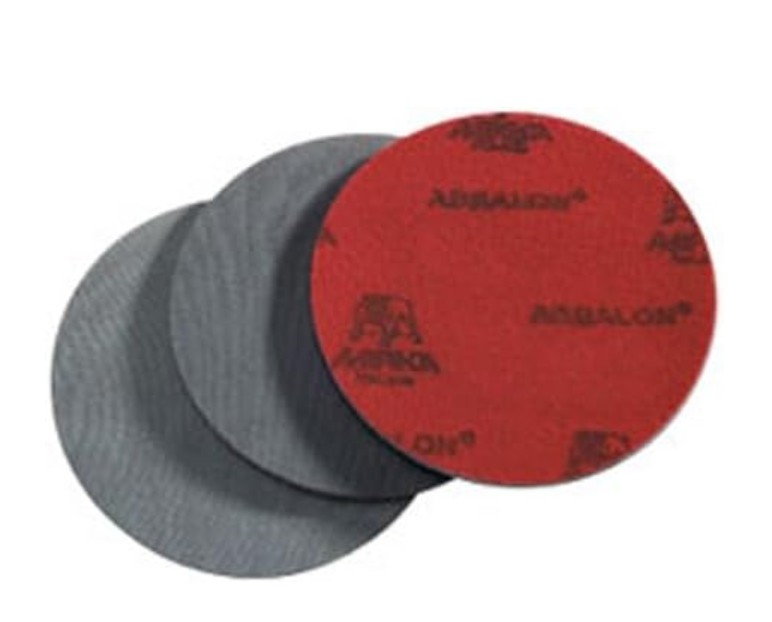
| Now it's possible to get the most aggressive surface texture without that "cheese grater" look.
Abralon sanding pads use silicon carbide particles that are precision sifted to a consistent grain size, then bonded evenly to a six-inch round fabric face for the most even scratch pattern available.
Why bowlers sand their bowling balls
Increase hook potential: A rougher surface creates more friction with the lane, helping the ball grip earlier and hook more.
Control ball reaction: Different grit sanding pads (for example, 500, 1000, 2000, 4000 grit) produce different amounts of friction. Lower grits are rougher; higher grits are smoother.
Match lane conditions:
Heavy oil: Rougher surfaces help the ball read the lane sooner.
Light oil or dry lanes: Smoother surfaces prevent the ball from hooking too early.
Restore performance: Over time, a ball's surface can become polished or worn. Sanding can return it closer to its intended reaction.
- Cosmetically appealing, consistent scratch pattern provides excellent traction
- Combines the benefits of abrasive cloth and non-woven products
- Opening in the fabric allows water to flow freely around the abrasive
- Resists "caking"
- Foam center holds large amounts of water for lubrication and cooling
- Solid surface and foam backing provide even surface pressure
- Last 5+ times longer than sandpaper
- Use wet or dry (residual material can be removed by high pressure air)
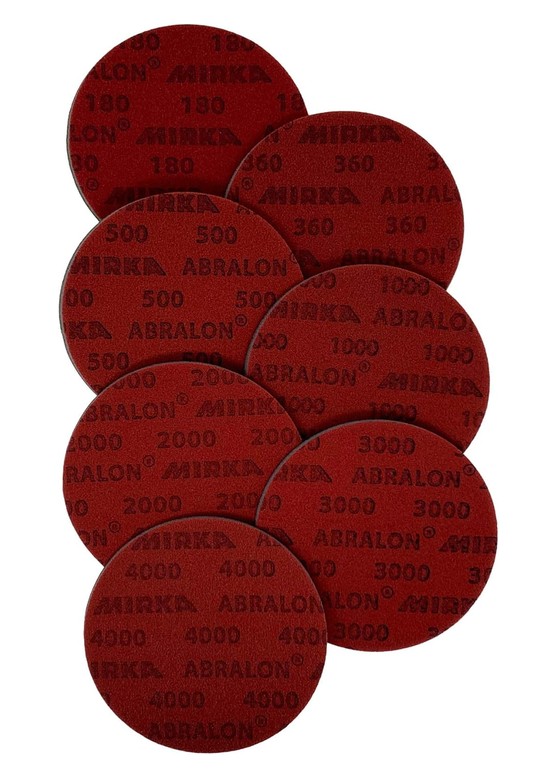
Choose the right pad for your needs.
P180 for deepest scratches
P360 for deep scratches
P500 for medium scratches
P1000 to return to Ebonite factory sanded finish
P2000 for a mild luster with texture underneath
P4000 for a high luster with smooth texture.
|